Natural beekeeping while respecting bees' needs. A cooperation and coexistence instead of production.
Home
Welcome to this exciting journey into the hidden world of the hive. Bees are amazing creatures.
Jolanta Dabrowski, M.Sc. (Entomology and Phytopathology)
Our main focus is on sharing knowledge about sustainable beekeeping and the propagation of survivor bees. We also collect swarms, helping bees find safe homes while also improving the survivability of our local colonies.
Our motto: “Observe and learn. Bees know better than we do what is best for them.”
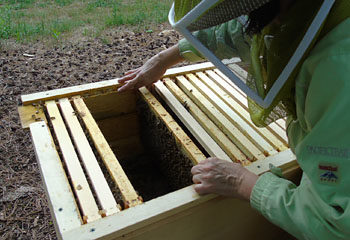
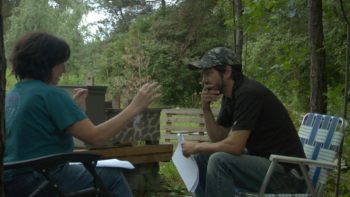
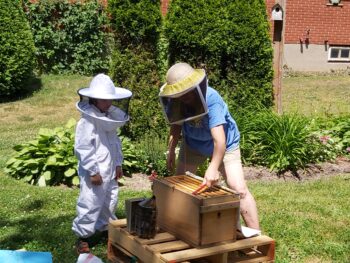
ConsultationOur class at the bee yardLong Langstroth hive frames inspection
Events
Our Events
In 2021 we participated in the virtual Kitchener Seedy Saturday on Feb 27th. It was exciting to present “Bees and Flowers”. In that presentation I was sharing knowledge why bees and flowers need each other and what to look for when choosing plants for a pollinators friendly garden.
Previous events
2020
Kitchener – Saturday, Feb 29th, 9:00am – 2:30pm – Kitchener Public Library, 85 Queen Street N. A lot of people were dropping by at our booth to say hello. Also my presentation “Bees and Flowers” went great. Lots of questions, great audience.
London – Saturday, March 7th, 10am-3pm – Carling Heights Optimist Community Centre, 656 Elizabeth Street. It was exciting to talk bees with several guests visiting our booth.
St. Thomas – Saturday, March 21st, 10am-3pm – St. Thomas Public Library, 153 Curtis Street. We had a lovely chat with our customers at our booth.
2019
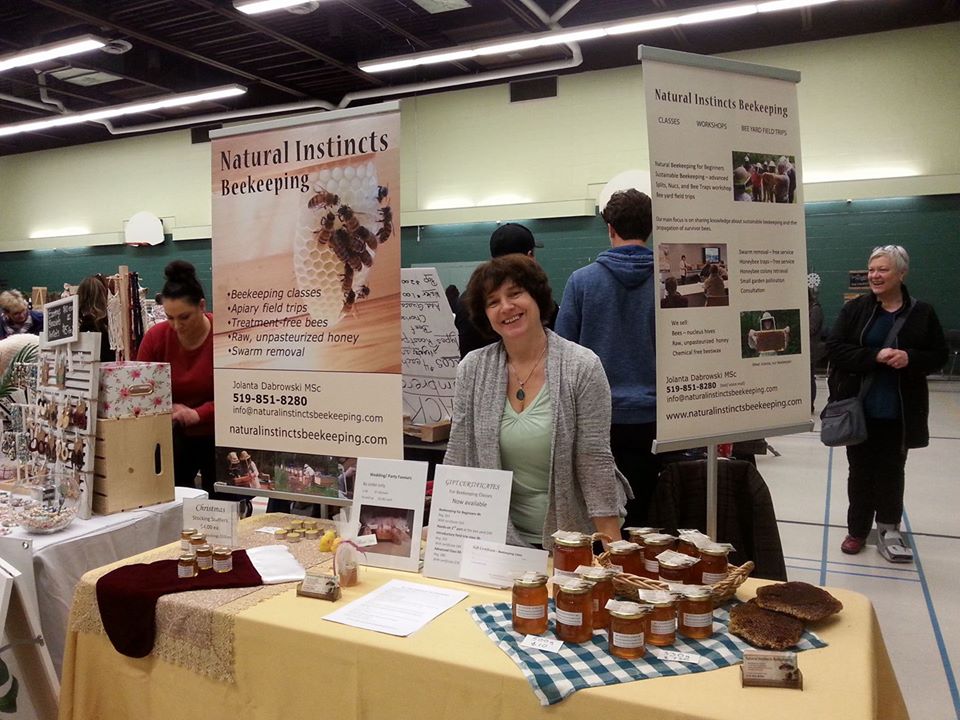
I had a great time talking to customers at Lovely Lambeth Christmas Market on Dec 1st. A lot of nice guests.
It was great to chat with so many people at our table at Seedy Saturday in St. Thomas on Feb 16th, 2019. Also thank you for a warm welcome at my presentation about backyard beekeeping.
We also were present at Seedy Saturday in London, ON on March 2nd, 2019. Thanks for dropping by at our table to say hello.
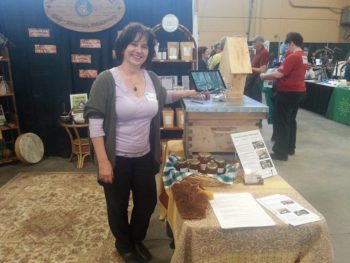
This year we participated together with The Living Centre at the Go Wild Grow Wild Green Expo on April 6th in London, ON. Thank you for visiting us to chat about bees and get on the list for the field trip to our bee yard.
Please do not hesitate to contact us if you have questions regarding our beekeeping classes.
We offer beekeeping courses for different levels of experience, available both as individual classes and as a five-part series: an intensive online training program via ZOOM, along with hands-on workshops at our educational apiary, including The Nuc Installation and Next Steps workshop.
Each course is packed with valuable information to help you become a successful beekeeper. You will learn practical tips, natural beekeeping methods, and the latest knowledge about honey bees and sustainable beekeeping.
Our live online ZOOM classes have been very successful over the past several years. Every session is interactive, allowing participants to ask questions and actively engage in the learning process.
At our educational apiary, we offer several hands-on workshops for different levels of beekeeping experience, from introductory courses for beginners to more advanced training.
If you are looking for a deeper understanding of the art of beekeeping — and it is about much more than simply keeping bees — we recommend the Natural Beekeeping for Beginners series: five courses and hands-on workshops offered throughout the season.
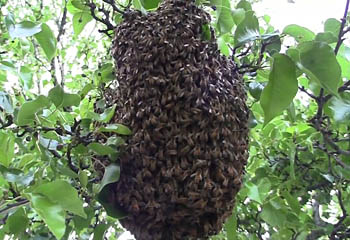
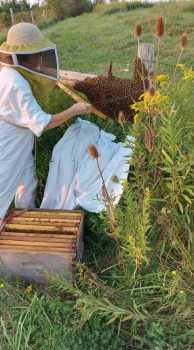
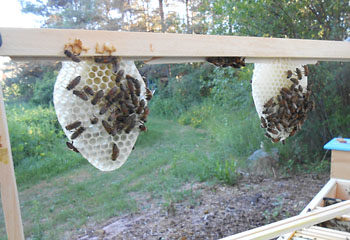
Do not call an exterminator! Honeybees can be safely removed from your property alive, without the use of toxic chemicals.
Do not spray the cluster. Please let us know exactly where the bees are located, how high the cluster is, and whether it is easily accessible.
Swarm removal from fence
Contact us as soon as possible. Swarm removal is a free service.
Important!
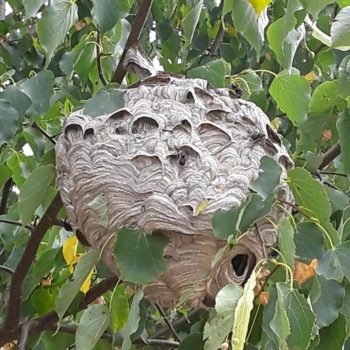
This is what a bald-faced hornet nest looks like. We do not remove hornets or wasps. We specialize exclusively in honeybee swarm removal.
Nest of a bald faced hornet
Please make sure that what you have are honeybees, not wasps or hornets.
If possible, take pictures of the bees and the site so we can assess the situation before arrival.
Honeybees are small and fuzzy, usually with golden-brown stripes. Yellow jackets are bright yellow with shiny bodies and very little hair.
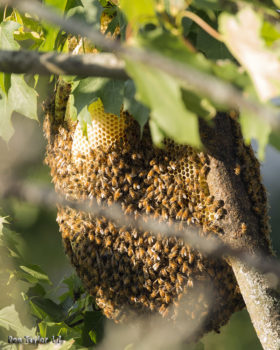
Open hive built by feral honeybees
Honeybee swarm boxes placement- Free of charge service
Have you had a problem with a feral honeybee colony on your property before? Removing a colony from inside walls or other structures can sometimes be expensive and stressful.
Even if you choose not to contact a beekeeper for a live removal and decide instead to call an exterminator or spray the colony yourself, the dead colony still has to be removed and all openings properly sealed. Otherwise, it may attract mice, cockroaches, and other vermin, and the comb and honey inside the walls can begin to rot.
Would you like to help prevent this problem in the future?
If you contact us, we can place a honeybee swarm box near the location previously occupied by the colony, free of charge.
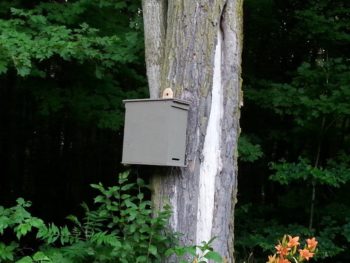
A swarm box
When a swarm pays you an unwanted visit, it is more likely to move into the swarm box instead of settling on your porch or in a nearby tree. This provides both you and the bees with a better option, helping prevent a feral colony from establishing itself in an unwanted location.
Once the swarm box becomes occupied, we will relocate the colony to a new, safe home in our apiary.
HOST A HIVE
Serving London and the surrounding area.
If you have a vegetable garden free of pesticides and herbicides and would like to enjoy healthier plants and better harvests, but there is a lack of pollinators in your area, consider hosting a hive on your property.
Hosting a hive creates a mutually beneficial relationship for both your garden and our bees. Our bees can help pollinate your flowering trees, shrubs, strawberries, and garden vegetables such as beans, cucumbers, zucchini, and squash, helping your garden thrive naturally.
We will take care of the bees throughout the season. If the year is bountiful and the colony produces surplus honey, you will receive a jar of raw, unpasteurized honey as a thank-you. Please note that first-year colonies sometimes do not produce excess honey.
Please contact us for more details.
Hosting a hive in a backyard
IN-PERSON CONSULTATION
We offer one-on-one consultations for beginner beekeepers. Whether you are just getting started or would like guidance with your first hive, we are happy to help.
Please contact us for more details.
One-on-one consultation
MENTORING
Would you like to learn the hands-on side of beekeeping from an experienced beekeeper? We offer practical guidance and support tailored to beginners and aspiring beekeepers.
Please contact us for more details.
Mentoring at the client’s backyard
Products
BEES – NUCLEUS HIVES
Our nucs (nucleus hives) contain a locally raised queen and worker bees adapted to our climate. We do not treat our hives with chemicals or antibiotics. Our bees are selected for survival in cold winter conditions using natural selection and natural beekeeping methods.
A nucleus colony includes:
a first-year queen
a strong population of worker bees
2 frames of brood (developing baby bees in their cells)
1 frame containing honey and pollen
1 empty drawn comb frame for the queen to lay eggs in
Please contact us for more details.
Raw, unpasteurized Honey
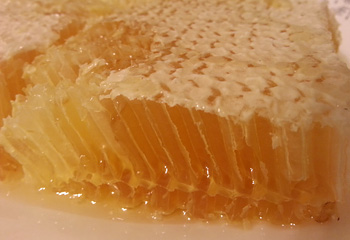
Honey on a comb. Yum!
We offer a variety of raw, unpasteurized honey products:
Honeycomb
Chunk honey (liquid honey with a piece of honeycomb in the jar)
Wildflower honey in 500 g or 1000 g jars
Stocking stuffer honey jar – 60 g
CHEMICAL-FREE BEESWAX
Our beeswax is pure, raw, and triple-filtered, with no chemicals or antibiotics used in the beehives.